Creative instinct can shape a fashion brand, but it can’t replace a clear business plan. A fashion brand coaching program brings online sessions, practical resources, individual feedback, and fashion-specific guidance together to support stronger business decisions. The focus is turning creative ambition into a business with direction.
You may know what you want your brand to stand for. The harder part is translating that vision into a clear position, a message customers understand, and a workable path to growth. That takes more than inspiration. It takes focused decisions and practical follow-through.
Here, you’ll learn what coaching programs can include, how sessions and feedback support progress, and which business stages benefit from different kinds of support. You’ll also see how to assess the fit and choose a next step, whether you’re seeking product-market fit or more consistent sales systems.
Key Takeaways
- At product-market-fit stage, clarify your ideal client, customer message, and position in the competitive space before pushing for growth.
- Use online sessions and individual feedback to turn business questions into focused decisions and practical next steps.
- Choose sector-specific coaching that matches your challenge, from developing a brand concept to strengthening sales and growth systems.
Entrepreneurship and business concept development
A fashion business concept turns creative direction into choices about customers, products, positioning, and sales. A coach can help connect those choices to a business plan, budget, and practical launch steps.
Fashion Business Concepts and Brand Development
Start with the customer, not just the collection. Define the ideal client, the need your designs meet, and the message that distinguishes your label in its competitive space. For example, a workwear label for independent professionals needs a different product offer and brand message from an occasionwear label.
A fashion brand coaching program offers tailored discussion and feedback, while a business course usually provides structured lessons for independent study. A consultant typically advises on a defined business problem; coaching focuses on the founder’s decisions and progress. A formal coaching certificate is not essential, but relevant fashion experience and developed coaching skills matter. Look for clear examples of industry knowledge and a practical process for turning feedback into action.
Business Models and Budgeting
Choose a business model that matches your product and how customers will buy it. Direct online sales, wholesale, or a mix each affects pricing, production planning, and cash flow differently. Your business plan should connect the target customer and sales channel to product costs, operating expenses, and revenue assumptions. Build a budget around specific decisions, such as a small initial run versus broader inventory.
Coaching may be worth considering when expert feedback can help resolve planning gaps or prevent avoidable missteps. Compare the support with the decisions you need to make, and be wary of promises of guaranteed success. Red flags include vague deliverables, pressure to commit before your goals are clear, or advice that ignores your product and customer.
Launching a Brand With a Coach
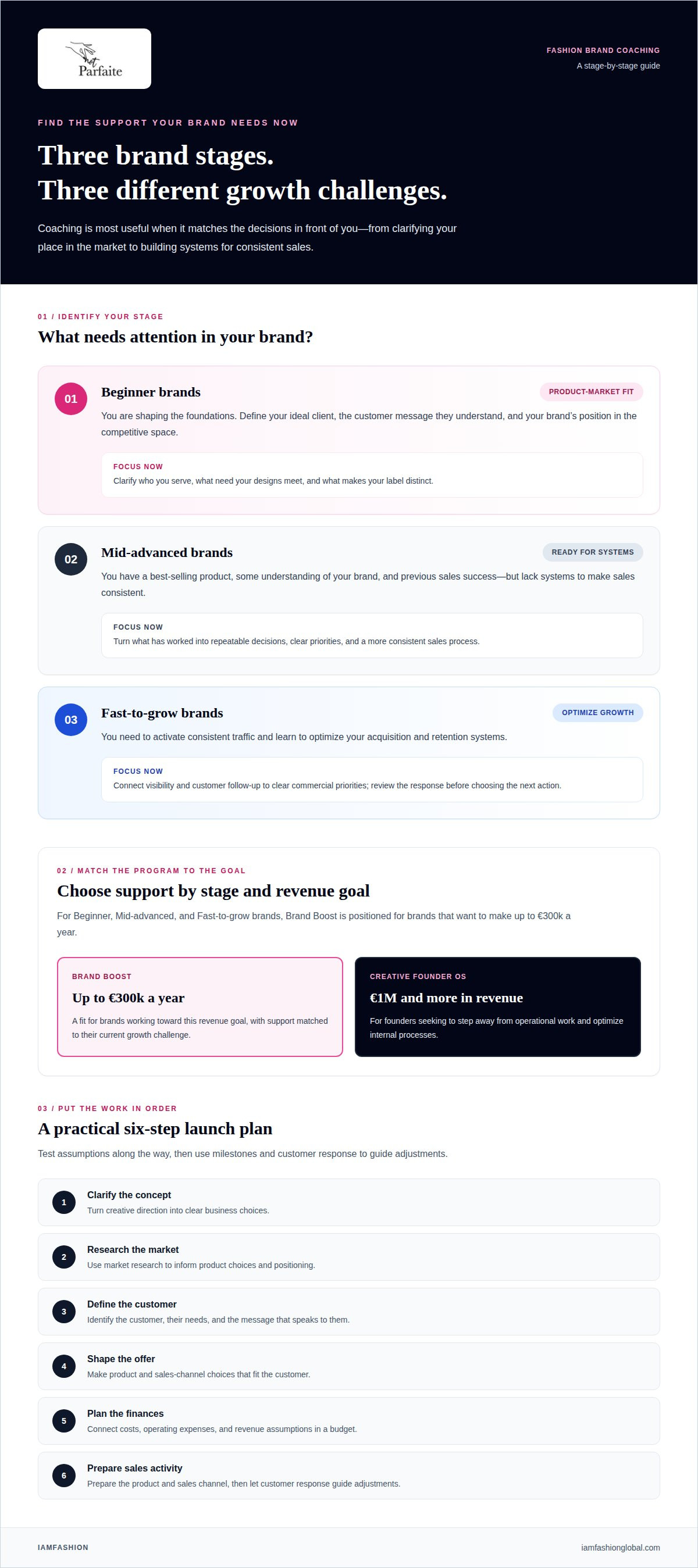
A launch plan can move through six practical steps: clarify the concept, research the market, define the customer, shape the offer, plan finances, and prepare sales activity. Use each step to test an assumption before committing more resources. Market research should inform product choices and positioning, while your budget sets boundaries for production and promotion.
Next, turn the plan into milestones, assign decisions, and review progress with your coach. They can assess the plan and identify practical next steps, including where the offer or customer message needs refinement. Then prepare the product and sales channel for launch, using customer response to guide adjustments. This gives creative vision a commercial structure without treating launch as the finish line.
Online course structure and live sessions
Online learning gives fashion founders a way to build skills around active business decisions. One course bundle includes 13 class modules, more than 30 hours of content, and lifetime access. Each module lasts 1.5 to 4 hours, so founders can work through topics at a manageable pace. Coaching adds discussion and feedback, helping turn lessons into decisions for a specific label.
Live sessions may be weekly or monthly, delivered one-to-one or in groups. For a focused issue, calls may happen once or twice a month. A one-to-one session can address current priorities, such as refining a product range or reviewing an online store. Group calls bring in peer perspectives, while individual sessions allow advice to focus on one brand’s situation.
Make each call actionable. Bring one decision, such as how to describe a new collection or improve a product page. Capture the discussion in an action plan, then record who owns each next step and its deadline. Tools such as Google Meet support video calls, while Google Docs can hold notes and track revisions. The tools matter less than leaving each session with clear actions.
Online store traffic also needs a deliberate plan. For SEO, align product titles and category descriptions with the terms customers use, then organize pages so shoppers can move from a collection to individual products. Google Search Console can help identify which search queries bring visitors. Review those queries alongside store activity, then refine page content and product messaging when the evidence points to a mismatch.
Connect coaching sessions to that review cycle: set a goal, implement changes, and examine the response before choosing the next action. A founder working on consistent traffic may focus on acquisition first, then consider how product pages and follow-up messages support retention. For practical fashion business growth guidance, use coaching to connect online visibility with clear commercial priorities.
Course resources and individual feedback
Useful learning resources help founders move from ideas to decisions. Fashion courses may combine video lessons, reading material, downloadable templates, and practical exercises. A clothing brand startup course can use worksheets to organize market research, product choices, and launch planning. These materials give founders a working record, not just concepts to remember.
Some coaching bundles include more than 175 templates, checklists, and scripts. A founder might use a checklist to prepare manufacturer questions, then adapt a script for customer interviews. Templates can also structure product descriptions, launch tasks, or basic financial planning. Treat each resource as a starting point: tailor it to the label’s products, customer, and sales model.
Expert input can extend that toolkit. One bundle includes more than 29 expert calls, giving learners perspectives beyond their own day-to-day decisions. For example, a founder refining a product range might use an expert discussion to identify questions about production or merchandising. The value lies in applying relevant advice to a defined business challenge, rather than collecting resources without action.
Individual feedback makes learning specific. A coaching program may include a review of the founder’s plan, followed by practical next steps. Bring a concrete draft, such as a customer profile or launch calendar, so feedback can address decisions rather than general ambitions. After the review, record changes, assign tasks, and set a time to assess progress.
A focused consultation can also give one issue dedicated attention. A single consultation may last 60 minutes, enough to examine a defined question and identify useful actions. For example, a founder could bring a product-page draft and ask for feedback on clarity, customer fit, and the next improvement to test. Keep the scope tight, then turn the discussion into a short action list.
Some courses also use completion milestones. Students who finish six weekly tasks and the final assignment by their deadlines receive a digital Certificate of Completion. That structure can help learners maintain momentum, while templates and tailored feedback connect each learning step to the business itself.
Fashion-sector coaching niches
Fashion coaching works best when its focus matches the brand’s current challenge. A startup needs different guidance from a label with proven sales but inconsistent growth.
Programs for Fashion Startups
The best program for a startup addresses its stage, product, and immediate decisions rather than promising a universal formula. During the product-market-fit phase, founders need to define an ideal client, shape a customer message, and position the brand against competitors. Look for coaching that connects these decisions to a focused product offer and a workable business direction.
For example, a founder developing a knitwear label may need to test who the designs serve before expanding the collection. A pattern-cutting specialist with 15 years of freelance experience may offer relevant technical insight, while a broader business coach may address positioning and sales planning. Match the coach’s expertise to the gap you need to close.
Choosing a Fashion Brand Coach
Choose a coach whose fashion experience and working method match your challenge. Ask how they would approach a specific issue, such as refining a product range or improving customer retention. Consider whether their guidance connects creative decisions with commercial priorities, and whether sessions lead to clear actions you can apply.
A formal coaching certificate is not essential, but a coach should have developed coaching skills and learned the fundamentals. Look for relevant industry knowledge, clear expectations, and feedback tailored to your brand. Avoid vague promises or advice that treats every fashion business as if it had the same customer and model.
Your stage matters, too. A mid-advanced brand may already have a best-selling product, a clear understanding of its brand, and past sales success, yet lack systems for consistent sales. A fast-growing brand needs reliable traffic and stronger acquisition and retention systems. Identify the constraint holding progress back before choosing a coaching focus.
Set one outcome for the next coaching phase, such as clarifying your message or improving repeat-purchase processes. Then review whether the coach’s fashion-specific expertise supports that goal. Explore fashion business coaching to connect your brand’s current stage with its next growth priority.
IAMFASHION: Brand Boost
IAMFASHION’s Brand Boost is a comprehensive 12-month program for fashion designers and creative brand owners building and scaling online.
For beginners still seeking product-market fit, the priority is defining an ideal client, customer message, and competitive position. Mid-advanced brands with a best-selling product and previous sales success can focus on building systems for more consistent sales. Brands ready to grow faster need to build consistent traffic and strengthen acquisition and retention.
It helps creative founders reduce operational workload and improve internal processes.
Contact IAMFASHION to discuss which direction fits your brand’s current stage.
Turn Your Next Business Decision Into Momentum
Your next move does not need to solve every challenge at once. Choose the business decision currently limiting progress, then make it the focus of your next coaching conversation. A sharper customer message, a more consistent sales process, or clearer internal operations can each create a stronger foundation for what comes next.
The right fashion brand coaching program should connect your creative direction with the commercial decision in front of you. Be specific about what you want to change, what is already working, and where you need practical guidance. That gives you a focused starting point and makes it easier to assess whether the support fits your ambitions.
IAMFASHION offers Brand Boost and Creative Founder OS for different business needs. Contact IAMFASHION about coaching to discuss the next step for your fashion business. Keep your vision bold, and build the business behind it with intention.
Frequently Asked Questions
What is a fashion brand coaching program?
A fashion brand coaching program is guided support that helps a founder make and act on business decisions for a fashion label. Unlike a self-paced course, coaching can adapt to the label’s priorities, such as choosing which collection to develop next or interpreting customer responses after a launch. The founder brings real decisions; the coach provides structure, feedback, and next actions. This format suits entrepreneurs seeking applied guidance alongside their own execution.
What topics do fashion brand coaching programs cover?
Topics can include brand positioning, product planning, financial forecasts, marketing, online sales, and day-to-day operations. For example, a coach may help map how a seasonal capsule moves from concept to product pages, then connect campaign timing with inventory and customer follow-up. Sessions may also examine which sales data to track, how to interpret customer feedback, and what operational task to systemize next. Focus on the business bottleneck so learning leads to deliberate priorities, not disconnected tactics.