Creative instinct can shape a standout collection, but it can’t replace a growth plan. The most damaging fashion business growth mistakes are neglecting core products in favor of trends, waiting too long to build an audience, spending without clear priorities, and launching without researching the market and competitors. Each can drain your budget before your brand has a steady foundation.
It’s easy to focus on designs, launches, and the next big idea. But sustainable growth also depends on clear decisions about what to sell, who you’re selling to, and how you use your money. This article covers four common fashion business growth mistakes and how to avoid them: relying too heavily on trends, waiting too long to build an audience, mismanaging spending, and skipping market research.
Key Takeaways
- Balance trend-led designs with core products that can stay relevant, and keep your range focused on a clear customer.
- Start building an audience before launch by sharing your brand story and creating reasons for potential customers to follow along.
- Prioritize essential product development and manage inventory carefully so spending supports sustainable growth.
- Research customer preferences and competitor positioning before committing to designs, products, or a launch plan.
1. Balancing trendy pieces with core products
A trend-led collection can attract attention, but it shouldn’t carry the whole business. Pair seasonal designs with core products that stay relevant across collections. For example, a brand known for statement prints could anchor its range with dependable silhouettes in its signature style. Core pieces give returning customers a reason to buy again, while trend-led items keep the offer fresh. Connect both through a consistent design language so every release still feels unmistakably yours.
Start with a defined customer and a focused product range. A startup serving customers who want versatile workwear has a clearer direction than a label trying to satisfy every style preference. Use that audience to decide which trend details fit your brand and which could blur its position. Stay flexible: adapt colors, prints, or styling as preferences shift, but don’t abandon products customers already recognize. A trend belongs in your range when it serves your customer and strengthens your brand, not simply because it’s getting attention.
Price each product using its actual costs and role in the range. Account for materials, production, packaging, and selling expenses before setting a retail price. Then check whether the price supports your required margin and makes sense alongside similar products competing for the same customer. A trend-led piece may use distinctive fabric or construction, while a core garment may rely on repeatable materials, so compare their cost structures separately. Don’t copy a competitor’s price or guess what customers will pay. Use customer response and sales patterns to refine your decision.
Before committing to production, map each product’s purpose: which items introduce the brand, which can become ongoing core pieces, and which test a specific trend? Keep the assortment focused to protect cash and maintain a clear identity. After each release, track sales by product, customer feedback, and unsold stock. If a trend-led style sells through while a core piece earns repeat interest, use that evidence to shape the next collection. This balance helps prevent a common fashion business growth mistake: investing in novelty without building products customers return to.
2. Building an audience before products are available
Start building an audience before your first collection reaches customers. A product and website won’t create demand if nobody knows the brand exists. First define the person you’re designing for: their style, needs, shopping habits, and reasons to choose your label. “People who like clothing” is too broad to guide a launch. A clearer audience might value versatile pieces for work and weekends. That focus gives your content purpose and helps potential customers recognize themselves in your brand.
Make your brand story part of the invitation. Explain what inspires the collection, what problem it addresses, and why its point of view matters. Share design sketches, fabric choices, fitting decisions, and the thinking behind each piece. These details give people something to follow before they can buy. Use social posts, email updates, or behind-the-scenes content to build familiarity, then invite interested followers to join a mailing list. A growing audience is more valuable when you can reach it directly, rather than relying only on changing social platform visibility.
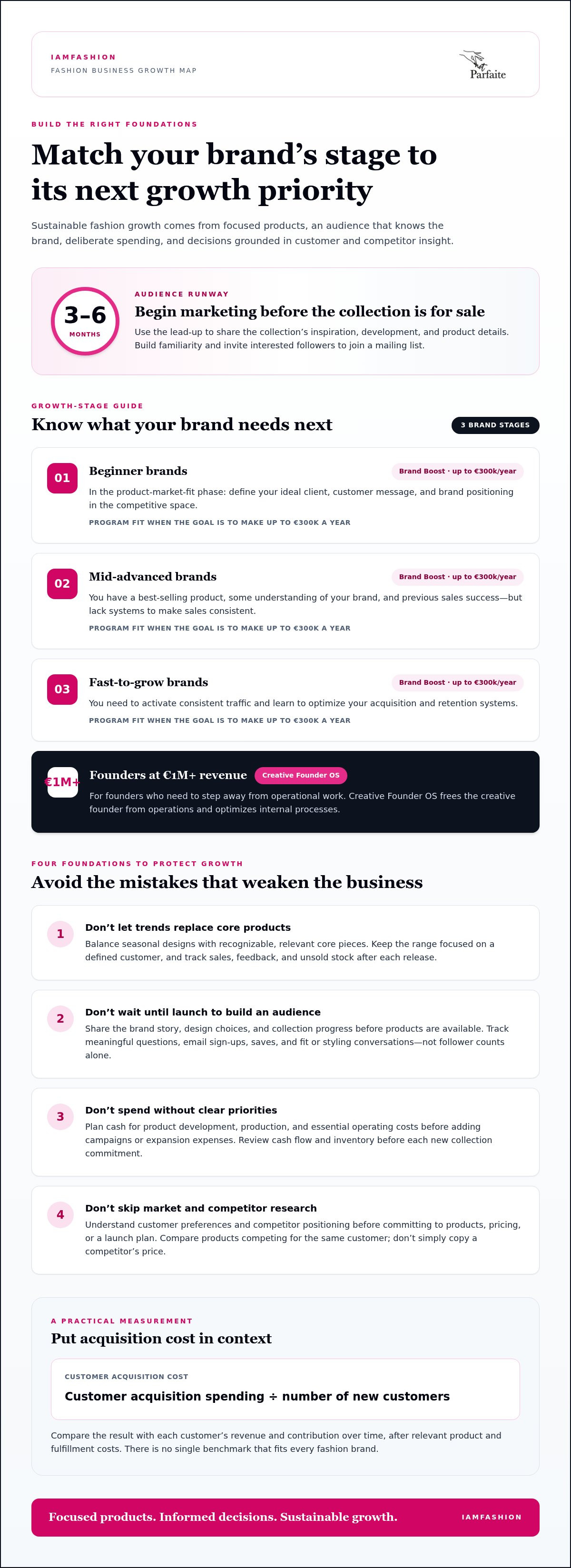
Plan the runway to launch. Fashion brands should begin marketing a collection 3-6 months before it becomes available for sale. Use that lead-up to introduce the collection gradually: reveal the inspiration, show development progress, answer questions, and share product details as they become ready. Keep the message consistent across your website, social channels, and emails. If a collection features relaxed tailoring, for instance, repeat that idea through styling examples and product previews instead of switching between unrelated messages. Consistency builds recognition and helps customers understand what the brand stands for.
Measure more than follower counts. Track which posts prompt meaningful questions, email sign-ups, saves, or conversations about fit and styling. Those signals can show whether your intended audience understands the offer before production and launch decisions are locked in. Adjust the message when people respond to a different benefit than expected. For practical guidance on building an audience before launch, connect your content plan to the customer and collection you’re preparing. That way, brand awareness grows alongside a clear reason to buy.
3. Financial management and spending priorities
Treat each spending decision as a choice between immediate visibility and business foundations. Before paying for a campaign, map the cash needed for product development, production, and essential operating costs. A strong photoshoot can support a launch, but it can’t replace the funds needed to complete sellable garments. Build a cash-flow plan around payment dates, production commitments, and expected sales timing. Review it before approving new marketing, packaging, or expansion expenses. This keeps creative ambition connected to the money required to deliver each collection.
There’s no single customer acquisition cost or lifetime value benchmark that fits every fashion brand. Calculate acquisition cost by dividing customer acquisition spending by the number of new customers. Then compare it with each customer’s revenue and contribution over time, after relevant product and fulfillment costs.
Manage trend-sensitive inventory through careful range planning and evidence from customer response. A trend can lose appeal before the next production run arrives, so avoid buying deeply without a clear reason. Track sales by style, size, and color, then compare sell-through with remaining stock. If a particular cut sells consistently, use that signal to guide replenishment. If a trend-led shade stalls, pause further orders instead of tying up cash in more units. Excess stock can force heavy markdowns and weaken a brand’s perceived value.
Set a regular review rhythm: check cash flow, inventory, and sales performance before committing to the next collection. Separate core products from experimental styles in your records, so one fast-moving item doesn’t hide slow stock elsewhere. Before expanding channels or increasing production, make sure your planning, supply, and cash controls can support the added commitments. A larger range can create more revenue opportunities, but it also multiplies decisions and cash tied up in stock. Disciplined spending helps the business respond when customer demand shifts.
4. Market research and competitor analysis
Research before designing, not after production begins. Define your target customer, then study what they buy, wear, and value. Compare brands serving a similar audience by reviewing their product ranges, materials, prices, photography, and customer comments. If other brands offer mostly neutral basics, a distinctive print or fit could help your label stand apart. Treat that as a hypothesis and test it with potential customers. Don’t copy another brand’s assortment; use the comparison to find an unmet need and sharpen your own position.
Turn observations into decisions. Ask potential customers which features matter, what frustrates them about current options, and where they discover new labels. Compare their answers with competitor reviews and product details. For example, repeated comments about difficult sizing could prompt fit research before you finalize a garment. Record the evidence and the decisions it supports. This keeps personal taste from becoming the only reason for a design, message, or launch direction.
Choose a sales channel based on the customer experience and operating model you can support. Direct-to-consumer gives you control over your storefront and customer relationship. Wholesale can connect your products with retail buyers, while marketplaces offer another route to shoppers. Before committing, compare each option’s margins, customer access, operational demands, and platform costs.
Use sales, return, and customer data together to guide growth. Review results by product, size, and channel, then compare return reasons with customer feedback. If one size has more fit-related returns, investigate measurements and product descriptions before reordering.
Market research also shapes launch marketing. Build a campaign around the customer’s reasons to care, not simply a collection announcement. A denim label, for example, could show how a jacket works across different outfits, explain its design choices, and answer fit questions. Use the response to refine product descriptions and content before release. Keep the message consistent across email, social posts, and product pages, then track which channels prompt meaningful questions and visits. Turn those findings into a focused growth plan with strategic support for fashion brands.
IAMFASHION: Brand Boost
Brand Boost is a comprehensive 12-month program to help fashion designers and creative brand owners build and scale online.
Choose support that fits your brand’s stage. Beginner brands working toward product-market fit need to define their ideal client, customer message, and position in the competitive landscape. Mid-advanced brands may already have a best-selling product and sales history but need systems to grow consistently. Fast-growing brands need consistent traffic and stronger customer acquisition and retention systems.
It helps free creative founders from operational work and optimize internal processes. Contact IAMFASHION to explore which program fits your brand’s stage.
Build your next move with intention
Your next growth decision can shape more than your next collection. It can influence your brand’s customer relationships, operations, and creative focus. Before committing, identify the business priority that matters most now, then make sure your next step supports it. A considered decision beats another rushed launch built on guesswork.
Recognizing fashion business growth mistakes matters only if it changes what you do. Turn what you’ve learned into a focused plan, review the signals your business already gives you, and adjust with purpose. You don’t need to solve every challenge at once. Start with the decision that will give your brand a stronger foundation for what comes next.
Explore your next growth step with IAMFASHION and keep building a fashion business that supports your creative ambition. Your vision deserves a strategy built to move it forward.
Frequently Asked Questions
What are the most common mistakes that prevent fashion businesses from growing?
Fashion brands often struggle when product decisions, customer demand, and business capacity don’t align. Launching too many styles, for example, can divide attention and make it harder to see what customers actually want. Growth can also stall when a brand relies on occasional launches instead of creating ongoing reasons to engage. Review a recent collection: which products attracted repeat interest, and which took time without strengthening the brand?
How can fashion brands validate product-market fit before scaling?
Validate product-market fit by testing whether a defined customer group chooses and values a product before you expand the range or production. Show prototypes or samples to potential buyers, ask what would make them purchase, and record concerns about fit, use, or styling. Compare their feedback with actual purchase behavior from a small release. If interest depends on frequent discounts or the product’s benefits are unclear, refine the offer before increasing your commitments.
What inventory planning mistakes cause overstock and stockouts for fashion businesses?
Overstock often follows broad buying decisions that ignore differences between styles, colors, and sizes; stockouts happen when replenishment starts too late. Track demand at the product-variant level and set reorder triggers based on sales pace, remaining inventory, and supplier lead times. Strong overall sales, for example, can hide slow-moving sizes alongside a fast-selling size. Review these patterns before placing the next order instead of relying on total collection sales alone.
How much should a fashion business spend on marketing as it grows?
Set marketing spend according to available cash, launch priorities, and your ability to fulfill resulting orders. Start with a defined campaign goal, such as qualified email sign-ups or sales of a specific product, then track the cost and outcome. Compare channels against the same goal and review results before shifting more budget. Protect funds needed for production and operations, and scale campaigns only when the results support the next commitment.
What pricing and margin mistakes limit fashion business growth?
A common mistake is treating markup and margin as interchangeable. Markup compares the selling price with product cost; gross margin measures the share of selling revenue left after product costs. Also account for channel fees, shipping contributions, returns, and discounts when assessing what a sale contributes. A garment may appear profitable at full price yet leave little contribution after repeated promotions or costly returns. Review each product’s economics by channel.
What operational and supply-chain risks should fashion brands address before scaling?
Before increasing production, map supplier capacity, material availability, quality checks, production timing, and payment obligations. A late fabric delivery can delay sampling or production, while inconsistent quality can make finished stock harder to sell. Document who approves samples, how changes reach suppliers, and how defects are handled. Keep a backup plan for critical materials or production steps so one disruption doesn’t derail the collection schedule.