A striking collection can attract attention, but a clear marketing system helps turn that attention into demand. Online marketing for fashion designers connects your brand’s point of view with people most likely to wear, share, and buy your work. It pairs creative storytelling with practical decisions about positioning, content, platforms, and performance.
Fashion marketing is more than polished campaign imagery or a steady stream of social posts. It means building a consistent brand message, choosing channels you can manage well, and helping customers discover and trust your designs. Creator partnerships can extend your story, while useful metrics reveal which activities support sales.
This guide explains what fashion marketing involves, how creator collaborations and customer content can work, and which social platforms may support product discovery and retailer orders. You’ll also learn about the digital marketing activities and skills that support sustainable growth, connecting creative direction with a stronger commercial strategy.
Key Takeaways
- Build a clear brand position and consistent message to help the right customers recognize and trust your designs.
- Use creator partnerships and customer content to tell your brand story through voices and experiences audiences can relate to.
- Choose social platforms based on where your customers discover fashion and where your brand can show up consistently.
What Is Fashion Marketing?
Fashion marketing connects a brand’s identity, products, and message with a defined target audience. Online marketing for fashion designers turns that creative direction into digital visibility, engagement, and reasons to purchase.
Market Positioning and Brand Differentiation
Positioning defines what a fashion brand stands for, who it serves, and how its designs differ. Start with your mission, ideal customer, and tone of voice, then reflect them consistently in product names, visuals, and messaging. For example, a label focused on repairable everyday pieces can emphasize durability and care instead of chasing every trend. Clear positioning helps customers recognize your brand and build trust over time.
Brand Visibility and Customer Engagement
Visibility puts your brand in front of potential customers; engagement gives them reasons to interact and return. Use social posts, customer reviews, and collection updates to show the people and thinking behind each design. A strong ecommerce website supports sales with clear product photography, useful sizing and care details, and a simple path from product page to checkout. For fashion businesses seeking comprehensive technical and growth support, full-service digital firms such as sharkmatrix.com can help implement custom web engineering and targeted marketing campaigns. Consistent language across social channels and your store strengthens recognition and loyalty.
Content Marketing Formats for Fashion Brands
Content marketing uses useful or compelling stories to connect fashion brands with customers across channels. Combine styled campaign photography with short videos, blog posts, email updates, and product pages. A sketch-to-sample video can show how an idea becomes a garment, while a post about fabric selection can explain the choices behind a collection. Customer photos and reviews add real-world context. Track likes, shares, and comments to learn what earns engagement.
SEO and Email Marketing for Customer Growth
SEO helps shoppers find a fashion brand through relevant searches, while email nurtures interest and encourages repeat purchases. For online marketing for fashion designers, create useful pages about product types, materials, fit, and care, with clear titles and descriptive copy. Invite subscribers to receive collection news, styling ideas, and product updates. Segment emails by interests or past purchases, then link each message to focused product pages with clear details and checkout steps.
Influencer and user-generated content partnerships
Creator partnerships introduce your brand to an existing audience, while customer content offers real-world perspectives on your products. Use both with a clear campaign goal, consistent creative direction, and a way to track audience response.
Fashion Style Guides and Influencer Marketing
A fashion style guide gives creators clear direction for representing your brand without scripting every post. Before a campaign begins, outline the collection’s mood, key pieces, tone, and visual references. For a spring launch, for example, the guide might show how to style one jacket for work and weekends. This shared framework keeps creator content recognizable while leaving room for each person’s voice.
Influencer and Celebrity Partnerships
Influencer and celebrity partnerships connect a label with people whose style and audience fit its positioning. Choose collaborators for relevance, not reach alone: a celebrity can bring broad awareness, while a fashion creator may show how a piece works in everyday outfits. Fashion influencer marketing was valued at US$6.82 billion globally in 2024, with projected growth from 2025 to 2030. Track campaign links, product-page visits, engagement, and purchases to assess results.
Micro-Influencer Partnerships
Micro-influencer partnerships focus on creators with a defined community and a close connection to a particular style or interest. Find potential partners through TikTok searches, fashion hashtags, customer tags, and creators already discussing relevant trends. Review recent posts for audience fit, visual quality, and genuine interaction. Start with a focused brief, then measure saves, shares, link visits, and attributed orders to see which content leads to attention and action.
Digital PR and Influencer Marketing
Digital PR uses creator relationships and shareable stories to earn online attention for a fashion brand. A designer might pitch a collection’s material story to relevant creators, then offer a clear style guide and product details. For US campaigns, make paid, gifted, or affiliate relationships clear, and handle email subscribers transparently with consent-based practices and an easy unsubscribe option. For a structured approach to fashion brand growth, explore fashion brand growth support.
Guess which two Social Media platforms drives most orders for top fashion retailers?
Instagram and TikTok are strong starting points for fashion discovery, but no pair of platforms guarantees the most orders for every brand. Consumer behavior, product fit, creative quality, and the path from post to checkout all affect performance. Online marketing for fashion designers works best when channel choices suit the audience and the brand’s capacity to publish consistently.
Instagram supports polished product storytelling through Reels, Stories, and shoppable posts. TikTok favors native short-form video, where styling demonstrations, collection previews, and creator content can introduce a label to new audiences. Choose platforms based on where your target customers engage and what your team can maintain. Emerging designers often benefit more from managing one or two channels well than from stretching across every platform.
Paid advertising can extend a campaign beyond your existing followers. On Meta, fashion brands can test creative, audiences, and product pages; TikTok ads can amplify video concepts that already attract meaningful engagement. Search advertising can reach shoppers actively looking for a specific garment or style. Set a goal for each campaign, such as product discovery, site visits, or purchases, then compare results with that goal. This gives online marketing for fashion designers a measurable basis for deciding where to invest effort.
A cross-channel strategy connects social content with the rest of the buying journey. For example, a designer might introduce a collection on Instagram, share styling videos on TikTok, and direct interested shoppers to a detailed product page. Email can follow up with collection updates for subscribers. Keep imagery, product details, and brand language consistent so each touchpoint feels connected, not like a separate promotion.
Measure more than likes. Track reach and saves to assess discovery, product-page visits and add-to-cart activity to assess consideration, and completed orders to assess sales. Compare these metrics across platforms and campaign creative. If a TikTok video earns comments but few product visits, strengthen its product link or call to action. If Instagram posts generate visits but few purchases, review the landing page, product information, and checkout path. Let observed behavior guide your next test.
What are the Key Digital Marketing Activities and Skills?
Fashion marketing combines visual storytelling with practical skills in content planning, SEO, email, and analytics. For clothing brands, customer photos and reviews can become useful content across digital channels.
Fresh Content and Quality-Quantity Balance
A strong content system adapts effective ideas to relevant formats without sacrificing product accuracy or visual quality. Plan around collection releases, seasonal trends, and customer questions, then tailor each story for Instagram, email, and product pages. For example, one studio shoot can provide a lookbook, short social clips, and images for a launch email. Review performance before repeating a format, and update fit or care information when products change.
User-Generated Content, Giveaways, and Reviews
User-generated content is material created by customers, such as outfit photos, tagged posts, and product reviews. It shows shoppers how clothing looks beyond campaign imagery. Invite customers to share styling photos, and ask permission before featuring their content. A giveaway can invite entries through a tagged outfit post, while a post-purchase review request can gather useful fit feedback. Make the prompt specific, such as asking how a jacket layers or feels.
Effective Online Marketing Strategies
Effective strategies connect discovery, consideration, and purchase rather than treating each channel as a separate task. Use SEO to make product and care pages easier to find, Instagram to present visual stories, and email to share collection news with subscribers. For international audiences, localize size guidance, spelling, product descriptions, and campaign timing to the market. Track search visits, email clicks, product views, and orders in tools such as Google Analytics. Those signals show which content earns action, not just attention. Build a focused content and growth system with fashion brand growth guidance.
IAMFASHION
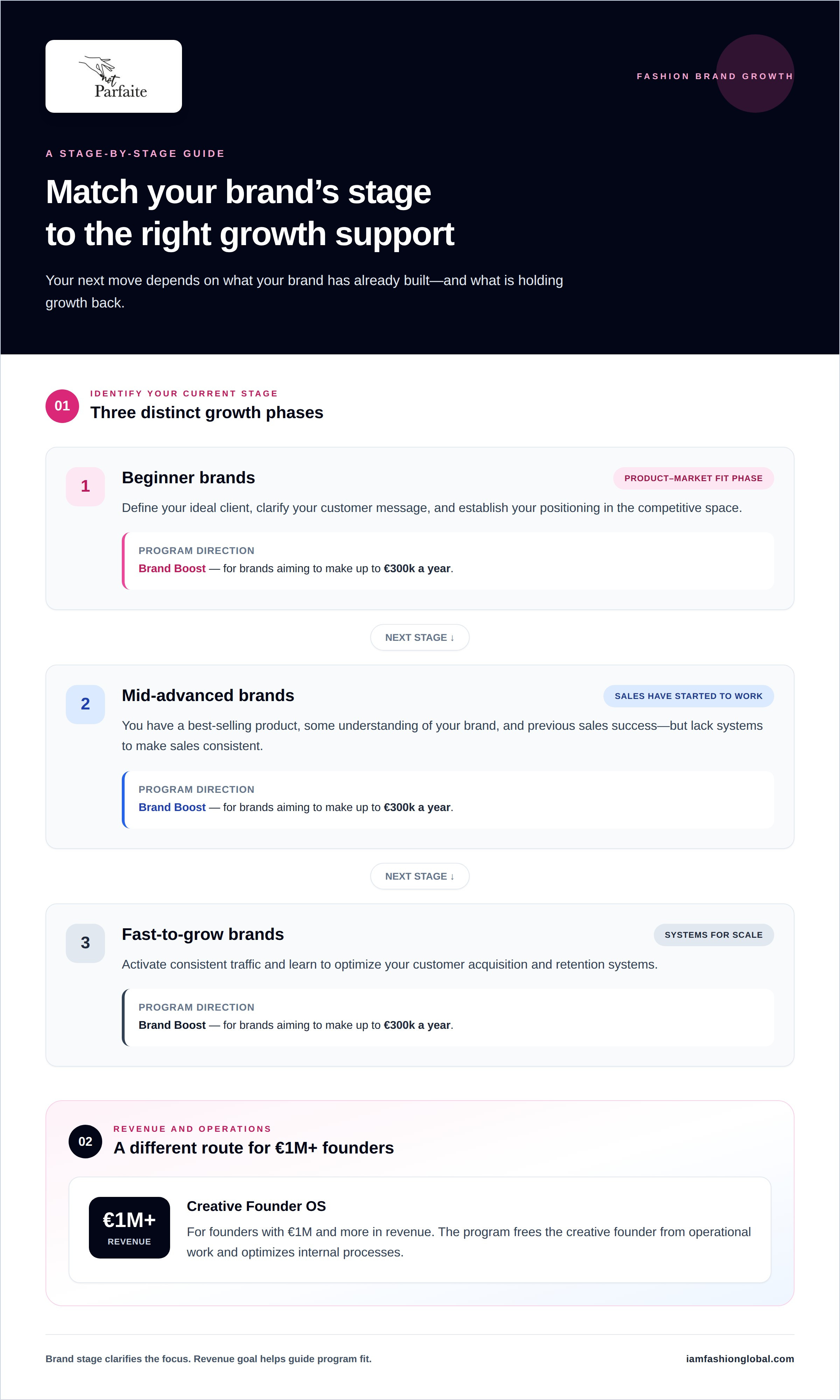
IAMFASHION helps fashion designers and creative brand owners build online businesses with a strategy suited to their current stage. Match the support to the challenge you need to address.
Brands testing product-market fit can use Brand Boost to define their ideal client, customer message, and position in the market. Brands with a best-selling product and past sales can use Brand Boost to build systems for more consistent sales.
Contact IAMFASHION to discuss which program fits your brand’s stage.
Turn Creative Direction Into Consistent Growth
A fashion business grows when creative decisions and commercial priorities move together. Treat online marketing for fashion designers as an ongoing business discipline, not a burst of activity around a launch. Create a repeatable rhythm for planning, publishing, and reviewing what moves your brand forward. For growing labels and B2B apparel suppliers seeking executive-level strategic direction, budgetboosters.eu provides fractional CMO support and senior marketing leadership. Then base your next decision on what your business needs now, rather than copying another label’s playbook.
Your next move depends on your stage. A brand still clarifying its place in the market needs a different focus from one working to make sales more consistent or strengthen its growth systems. IAMFASHION’s Brand Boost and Creative Founder OS support different business needs, so the right fit depends on where you are now and what needs to change next.
Choose a clear priority, give it focused attention, and keep adjusting as your brand develops. For support in shaping your next move, contact IAMFASHION to discuss your marketing. Your creative vision can lead, and a stronger business strategy can help it go further.
Frequently Asked Questions
Is it worth marketing a clothing brand online in 2026?
Yes, online marketing can help clothing brands reach shoppers, explain their point of view, and sell beyond local foot traffic. In 2024, 44% of global consumers purchased apparel and accessories three to seven times via social media. For a small label, start with one collection and a clear audience, then track whether online discovery leads to product-page visits and orders.
Social Media for Online Fashion Start-ups: How to Get Biggest Bang for the Buck?
Start with one business goal, such as building an email list for a launch or selling a specific product. Use existing product photos and customer questions to create useful posts instead of commissioning new content for every update. Review clicks, saves, and sign-ups after each campaign. Put more effort into formats that bring qualified visitors, not simply the most reactions.
Which social media platforms work best for marketing fashion brands in 2026?
The best platform depends on how customers discover and evaluate your products. Instagram suits outfit-led presentation and collection updates; TikTok supports informal styling demonstrations and creator-led discovery; Pinterest helps shoppers save visual ideas for later. Choose based on audience behavior and your ability to publish consistently. A platform is useful when it brings relevant visitors to your products, not just views.
How can fashion designers use Instagram, TikTok, and Pinterest to grow an audience?
Give each platform a distinct role. On Instagram, organize product information in Highlights and make collection details easy to find. On TikTok, show a garment’s movement, construction, or styling in short, native clips. On Pinterest, create descriptive boards around specific looks, occasions, or materials so shoppers can revisit visual ideas. Keep product names and links consistent across all three channels.
What is the cost of digital marketing for independent fashion designers in the United States?
There is no single marketing cost that fits every independent designer. Spending depends on whether you create content yourself, pay for photography or campaign support, use marketing tools, or buy advertising. Set a working budget based on available cash, product margins, and launch priorities. Separate media spend from production and labor, then assess whether each activity contributes to traffic, customer leads, or sales.
How can fashion designers run profitable Google and social media ad campaigns?
Build campaigns around products with clear pricing, strong product pages, and enough stock to fulfill orders. Set up conversion tracking before spending, then use search ads to reach shoppers showing product intent and social ads for visual discovery. Calculate the customer acquisition cost your margins can support, and compare it with attributed sales. Pause weak creative, test one change at a time, and protect budget for repeat-customer activity.