Creativity needs a calendar, not just inspiration. To organize a creative business, block time for selected ideas, choose three priority tasks each day, and keep deadlines, resources, and goals in one reliable system. That structure protects creative work while giving essential business responsibilities a clear place.
You may already know that ideas arrive unpredictably, while emails, planning, and follow-up keep coming. The answer isn’t to squeeze more into every day. It’s to decide what deserves your attention, then build a workable rhythm around it.
This guide shows you how to schedule idea work during your most productive hours, sort projects by category and priority, and track the time, supplies, and investment each requires. You’ll also learn practical ways to keep records and balance making with managing, so your creative business can move forward without relying on memory or last-minute scrambling.
Key Takeaways
- Protect focused time for idea work by placing it where it fits your energy and schedule.
- Sort projects by category, priority, or difficulty so the next action is easier to choose.
- Track each idea’s resources, timeline, investment, and desired outcome in one practical record.
1. Scheduling time to work on selected ideas
Start with your calendar, not an open-ended to-do list. Choose one idea that supports your current goals, then reserve a focused block for its next step. Schedule that block during your most productive time of day. If you think best in the morning, protect that window for design or development instead of letting email take it over. This helps you organize a creative business around work that moves an idea forward.
Make the block specific. “Work on collection” is hard to act on; “sketch three looks for the collection” gives the session a clear finish line. Add the task to your calendar or schedule a reminder on your phone. At the end of each weekly planning session, review what you completed and choose the next action. This simple review shows you where each idea stands without making you carry every detail in your head.
Separate creative work from administration. Artist Ann Flemings dedicates about 15-20 hours a week to her art practice in her Austin, Texas studio. She typically paints in the afternoons, allowing her creative energy to build and flow, and sets aside one to two hours daily for emails, digital files, applications, and social media scheduling. Use her example as a prompt, not a template: set blocks that fit your workload and energy.
If you employ a team, schedule shifts as deliberately as creative sessions. Employee scheduling software can organize shifts and help prevent worker burnout. For a flextime team, use scheduling software to track staff availability and avoid gaps or conflicts with key meetings. Share the schedule in one place so everyone can see assigned hours and coordinate handoffs.
Keep the system lean. Reserve time for ideas, assign each session an outcome, and group routine administration into its own block. When an urgent request interrupts a session, record it for your next planning review instead of abandoning the idea. Your calendar should make room for both value-creating work and the responsibilities that keep the business moving.
2. Grouping ideas by category or priority
Capture ideas first, then sort them before they compete for attention. Create categories that reflect how your business works, such as product development, content, customer experience, and operations. A fashion designer might put a new fabric concept under product development and a campaign idea under content. Use labels that make sense to you and apply them consistently. Clear categories make related ideas easier to find and reveal which ones support the same project.
Next, add a priority marker to each idea. Group items as “now,” “next,” or “later,” or sort them by the effort and resources they require. For example, updating product photos might be a quick next step, while developing a new product line needs more planning. Keep priority separate from excitement: an inspiring idea isn’t necessarily the most useful action for the business right now. Choose a simple method you’ll maintain.
A Google document can organize ideas under headings for different topics. Add a short description and next action beneath each heading, such as “test fabric samples” or “draft launch message.” This keeps related notes together and makes the path forward clear. If you collect sketches, links, or voice notes in different places, move the ones you want to develop into the matching category. Avoid building a complicated filing system before you know what you need to retrieve.
Multimedia artist Diego de los Campos organizes creative work by selecting and editing images, grouping files by theme, and recording each piece’s date, medium, and size. Apply the same logic to your ideas: name the concept, record its category, and note the detail that will help you recognize it later. For a fashion collection, that could mean a silhouette, material, or intended customer. Keeping useful context beside each idea makes sorting more deliberate and helps prevent promising concepts from disappearing in an unstructured archive. For founders refining how ideas connect to their commercial direction, creative business guidance can offer a useful next perspective.
3. Tracking resources, timelines, investment, and goals
Give each project a record that connects the idea to its execution. In an online document or spreadsheet, note the materials, timeline, expected investment, reason for pursuing it, and desired outcome. For a new product, list supplies, production steps, launch tasks, and the result that would make the project worthwhile. A clear record helps you compare ideas and decide where to invest your time and resources.
Startup costs for a creative business depend on what you plan to sell and the resources it requires. Materials, equipment, workspace, production, and sales channels all affect your starting needs. List those requirements before committing funds.
Build a practical business plan around your offer, intended customer, sales approach, required resources, and goals. Add milestones and deadlines to a calendar, then track progress against the intended outcome instead of collecting ideas without a next step.
Record business expenses, receipts, and income, even during periods of low sales. Set aside two days each month to enter financial information, and update your files weekly so details don’t pile up. Track sales tax collected and relevant filing dates alongside sales records, following the rules that apply where you operate and sell.
Choose tools that fit the work: a paper or electronic calendar for deadlines, a spreadsheet for artwork inventory and event requirements, and an online document for project details. A CRM can keep customer information accessible to team members. Use one project and task system consistently, and store key records where you can find them.
For every project, review its timeline, resources used, and progress toward the goal. Then decide whether to continue, adjust the plan, or pause the investment.
Artists can use a spreadsheet to track current artwork inventory and note when work is at a gallery or exhibition. Diego tracks deadlines, requirements, and contact information for calls for entries, residencies, conferences, and shows in a spreadsheet.
Creative business owners can use a paper or electronic calendar to track important dates, deadlines, and personal events.
4. Balancing creative work with business responsibilities
Balance comes from deciding what gets attention, not doing everything at once. Start each workday with a list of three priority tasks: one creative, one operational, and one commercial. For example, sketch a product concept, send a client update, and review a sales message. At day’s end, spend 10 minutes returning tools, recording depleted supplies, and preparing the next task. Small closing routines reduce clutter before it steals tomorrow’s focus.
Use one project and task system consistently, whether it’s a notebook or digital board. Batch similar work, such as client emails or order preparation, and stage materials for the next project before closing your workspace. Formal processes clear mental and digital clutter, giving creative work a defined place without pretending administration disappears.
For a U.S. business structure, weigh ownership, liability exposure, tax treatment, administration, and growth plans. Compare a sole proprietorship, LLC, and corporation based on how each handles those factors and the records or formal processes you’re prepared to maintain.
To register, identify your business name, structure, location, and activities, then follow the registration and permit steps that apply in your state and city. Local rules can depend on where you work, what you sell, and whether customers visit your studio, so record the relevant requirements in your compliance calendar.
Use written client contracts to define scope, deliverables, payment terms, deadlines, revisions, and cancellation terms. Document intellectual property ownership, usage permissions, and any licensing rights for artwork, designs, photography, or other creative work.
Set prices by accounting for materials, labor, overhead, customer value, and the margin your business needs. Find clients through a focused message, consistent content, and direct outreach; track which channels lead to inquiries and sales. Insurance decisions should reflect exposures such as studio visitors, equipment, inventory, and client work. To build stronger systems around your creative business, explore practical business support.
Creative business owners can use a daily list of three priority tasks. At home, batch similar tasks and stage supplies for the next project before closing the workspace. Formal processes reduce mental and digital clutter.
IAMFASHION: Brand Boost
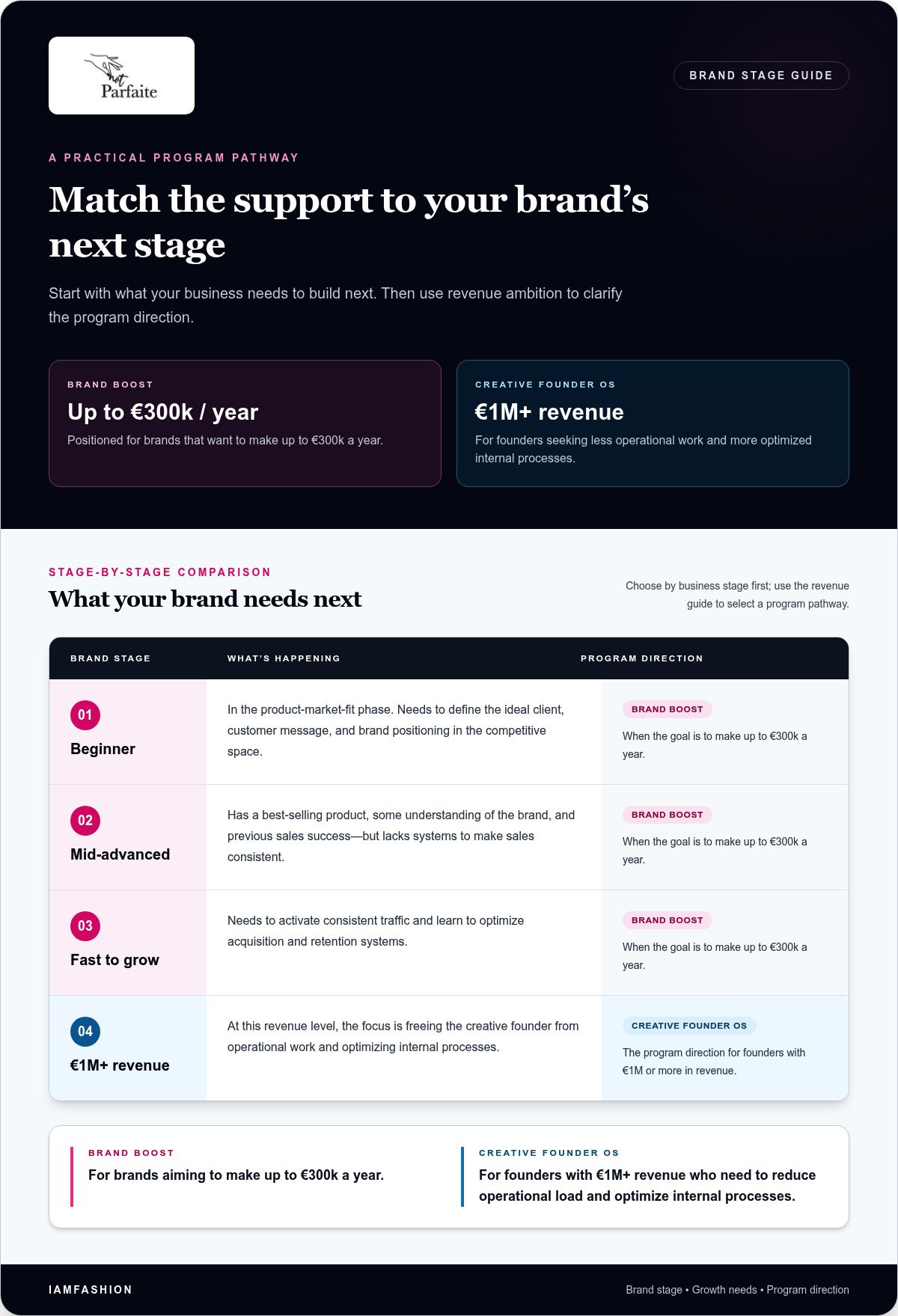
Choose support based on your business stage, not just the next idea you want to launch.
Beginner brands are still working toward product-market fit. They need to define their ideal client, customer message, and position in the competitive space. Mid-advanced brands have a best-selling product and previous sales success, but lack systems for consistent sales. Fast-to-grow brands need consistent traffic and stronger acquisition and retention systems. Brand Boost is designed for these stages.
Contact IAMFASHION to discuss which path fits your business.
Build a business that gives your creativity room to grow
Turn your working habits into decisions that support the future you want. Ask what kind of business you’re building, what’s slowing it down, and which capability needs attention next. Clear answers help you focus on meaningful progress instead of adding tasks to an already crowded schedule.
Choose one business challenge to address, then give it a specific next action. That might mean clarifying the customer you want to serve, strengthening a sales process, or reducing operational friction. Start with the needs in front of you, and let each decision create room for the next.
You don’t need to wait until every workflow feels perfect. Contact IAMFASHION to discuss your business and identify a useful next step. Keep creating with ambition, and give your business the structure to move forward.
Frequently Asked Questions
How do I compare an LLC, sole proprietorship, and corporation for a creative business?
Compare a sole proprietorship, LLC, and corporation based on ownership, liability exposure, tax treatment, administration, and your growth plans. Consider the records and formal processes you’re prepared to maintain.
How do I register a creative business and get required licenses and permits?
Identify your business name, structure, location, and activities, then follow the registration and permit steps that apply in your state and city. Record the relevant requirements in a compliance calendar.
What local business rules apply to creative businesses in my state or city?
Local rules can depend on where you work, what you sell, and whether customers visit your studio. Record the requirements that apply to your business in a compliance calendar.