Deadstock fabric can become more than an inventory problem. The psychological toll of deadstock fabric debt on creative founders can include persistent stress, second-guessing, and difficulty making confident decisions when fabric costs remain a burden while materials sit unused. Buying ahead may feel like a way to protect production, but changing collections, canceled orders, or shifting demand can leave a founder holding more stock than the next design requires.
That pressure is real, and it doesn’t mean you’ve lost your creative edge. It means your materials, cash flow, and plans are pulling in different directions. This article explores how that strain can affect mental well-being, business decisions, and your relationship with the work you set out to make. You’ll also see why surplus builds up, how to recognize when inventory is shaping your choices, and how clearer business systems can help you move forward with more control.
Key Takeaways
- See how unused fabric can weigh on wellbeing, cloud decisions and strain a founder’s connection to creative work.
- Recognize how changing collections, canceled orders and shifting demand can leave materials unused and business plans under pressure.
- Separate the value of your creative vision from the burden of inventory, then make business decisions with clearer priorities.
Psychological toll of deadstock fabric debt on creative founders
The psychological toll of deadstock fabric debt on creative founders begins when materials stop feeling like creative possibility and start feeling like unfinished business. A roll purchased for a planned collection can remain in storage after demand shifts. Each time the founder sees it, the fabric can bring to mind the money committed, the decision made, and the sales still needed to justify it. That pressure can follow them from the studio into planning, promotion, and rest.
Deadstock means unused fabric, but the reasons it accumulates vary. A brand might have surplus after changing a collection, canceling an order, or misjudging demand. Even a small variation in color, texture, or finish can make fabric unsuitable for its original purpose. Imagine a designer with fabric chosen for a coordinated set of garments. If the finish differs from the approved sample, using it may undermine the intended look. The stock remains, and the founder must decide whether to adapt, postpone, or abandon the design.
That unresolved choice can consume attention. A founder may revisit the same fabric decision instead of moving forward with product development or customer communication. They might delay a new sample because existing stock feels like a commitment that must come first. Or they may design around the surplus, even when the result no longer fits the brand’s direction. These decisions aren’t proof of poor creativity. They show how a material constraint can quietly become a business constraint.
How inventory pressure shapes decisions
Separate the physical stock from the decisions attached to it. Start with a simple inventory review: identify each fabric, its condition, its original purpose, and the product plans that still make sense. Then sort the options into practical routes, such as using it as planned, redesigning for another product, or pausing further commitments. The goal isn’t to force every roll into a collection. It’s to replace repeated guesswork with a clear decision.
- Check fit: Compare the fabric’s color, texture, and finish with the product concept and brand position.
- Check demand: Consider whether the intended product still meets a clear customer need.
- Choose a route: Decide whether to proceed, adapt the design, or stop treating the stock as a required input.
These steps can reduce decision fatigue by giving each material a defined next action. For example, a designer may find that surplus fabric suits a limited accessory better than the original garment. That option only makes sense if the product still fits the brand and has a plausible customer. Repurposing stock simply to feel productive can create another slow-moving product. A clear choice protects both creative focus and commercial judgment.
The stress can also change a founder’s relationship with the work. If every sketch becomes a reminder of inventory, experimentation may start to feel financially risky. A founder might reject a fresh idea before testing its appeal, or resent the material that once inspired the collection. The fabric hasn’t erased the creative instinct; the pressure has narrowed the space available to use it. Naming that distinction helps founders make choices based on the design and customer, rather than guilt about past spending.
Deadstock also sits within a wider waste problem: the fashion industry produces millions of tons of textile waste every year. That context can make unused fabric feel morally loaded, not merely costly. Yet carrying surplus indefinitely doesn’t automatically make a business more responsible. Without a circular system, excess fabric may sit in storage for years or be discarded. A founder can acknowledge that tension while still making a practical decision about what the brand can use.
Protect creative capacity with a regular stock review, not an endless internal debate. Set a review point for each fabric and record the chosen route, responsible person, and next action. When collections change or orders shift, update the plan instead of treating the original decision as permanent. This approach won’t make every material usable, but it gives the founder a firmer basis for action. Creative ambition needs room to evolve, and inventory decisions should support that movement rather than dictate every next design.
IAMFASHION: Creative Founder OS
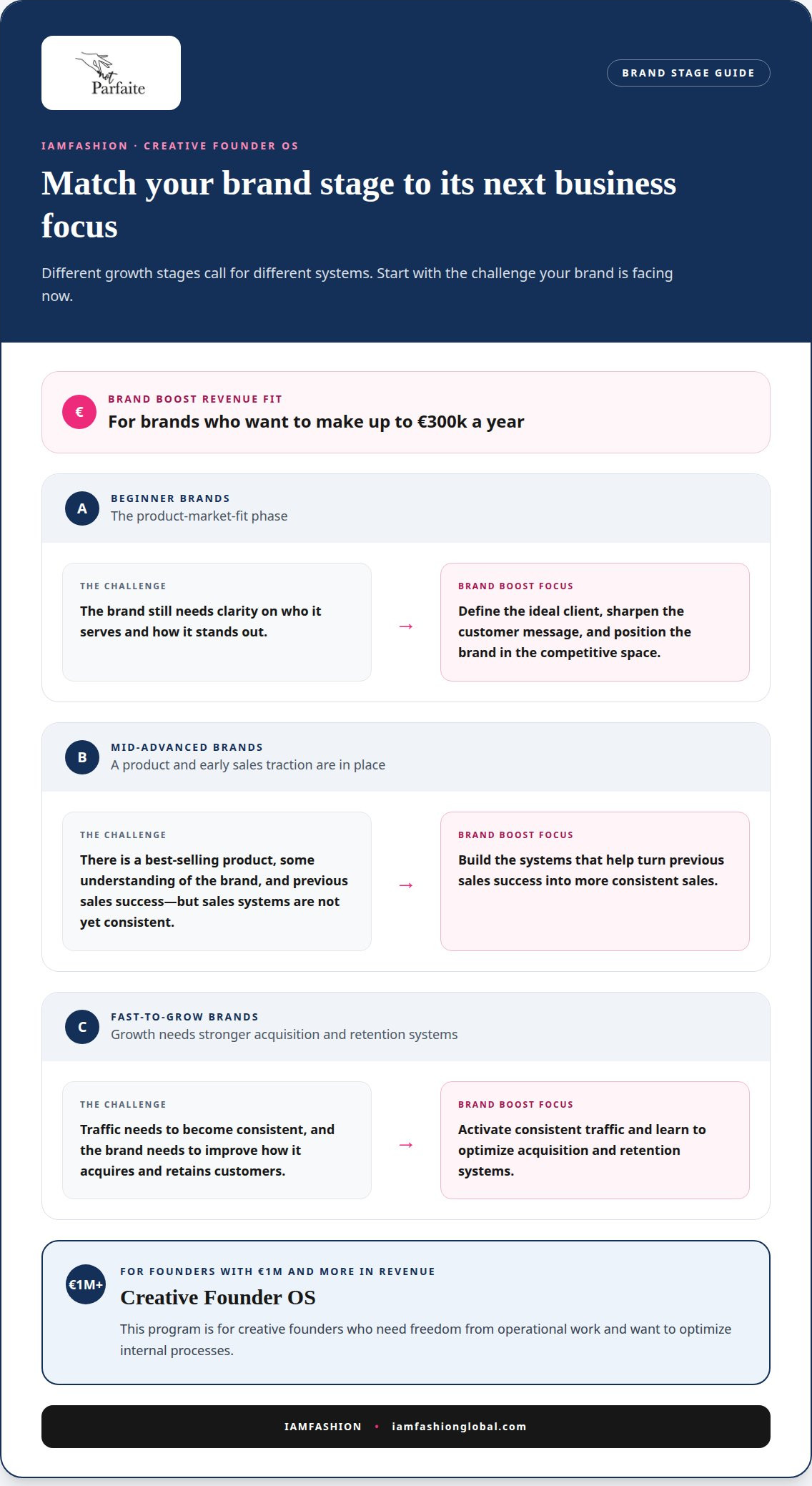
Choose according to your stage. Beginner brands working toward product-market fit can use Brand Boost to focus on their ideal client, customer message, and position in the competitive landscape. Mid-advanced brands with a best-selling product and previous sales success can use Brand Boost as they build systems for more consistent sales. Fast-to-grow brands can use Brand Boost while working to activate consistent traffic and optimize acquisition and retention systems.
Each stage calls for a different business focus. Choose the program that matches yours.
Make space for your next creative decision
Your next move doesn’t need to solve every inventory challenge at once. Choose one decision that has been taking up attention, set a clear direction, and make room for the work that moves your brand forward. The psychological toll of deadstock fabric debt on creative founders can make every choice feel tied to a past commitment. A deliberate next step helps shift your focus from what’s already sitting still to what your business needs now.
Growth also means building a business that supports your creative judgment, rather than leaving you to carry every operational decision alone. The right support should fit your brand’s stage and the systems you need to strengthen. Take the next step at your pace, with a clearer view of the challenge and the outcome you want.
Discuss your challenges with IAMFASHION and choose a path that gives your creative work room to grow.